Ọ̀ṣun and Oya: Two Powerful Forces and Their Relationship


There are stories about Ọ̀ṣun that introduce us to her through love, beauty, sweetness, the river, and prosperity. There are other stories that show us a different side of her—her relationships with the other powerful women of the Orisha tradition.
One of those women is Oya.
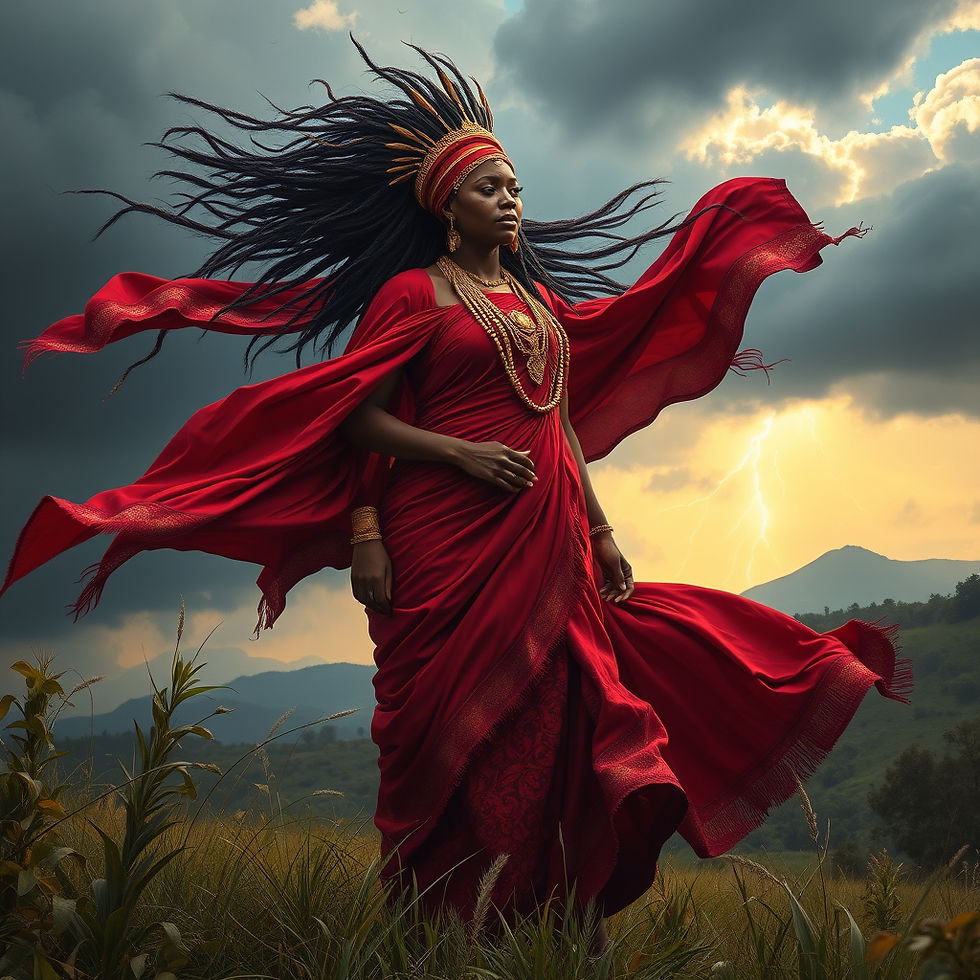
Oya is a powerful Orisha associated with wind, storms, transformation, and movement. She is also strongly connected with the Niger River. Like Ọ̀ṣun, she has a deep relationship with water, but the way that relationship appears is very different.
Ọ̀ṣun is associated with the flowing waters of the river.
Oya is associated with the force that moves through the air and changes everything around it.
And in some traditions, these two powerful women are not strangers to one another.
They are sisters.

Ọ̀ṣun and Oya as Sisters
Some traditions describe Ọ̀ṣun and Oya as sisters, sometimes alongside Ọ̀ba and other female Orishas connected with rivers.
In these tellings, the relationship between the women is not simply about being connected to the same man. They knew one another as family, and their stories could involve loyalty, protection, separation, and reunion.
One tradition tells of Oya being captured during an attack on her community.
Oya was the younger sister, and Ọ̀ṣun cared deeply for her. When Oya disappeared, Ọ̀ṣun was devastated.
She searched for a way to bring her sister home.
The story describes Ọ̀ṣun gathering the money needed for Oya's release until she finally had enough to pay for her sister's freedom. In this telling, Ọ̀ṣun's love for Oya is not simply spoken about—it becomes action.
She uses what she has to bring her sister back.
This story gives us a very different picture of Ọ̀ṣun.
We often hear about her sweetness, beauty, attraction, and ability to draw things toward herself. But here, that love becomes determination.
She does not simply wait for Oya to return.
She works to get her back.

Another Tradition: Sister-Wives
There is another way their relationship appears in traditions surrounding Ṣàngó.
Rather than being presented as biological sisters, Ọ̀ṣun and Oya can appear as separate powerful women whose lives become intertwined through their relationship with Ṣàngó.
Academic discussions of Yoruba and Afro-diasporic traditions describe Ọ̀ṣun, Oya, and Ọ̀ba as important river-associated Orishas connected with Ṣàngó, while other sources specifically note that some traditions describe the three women as sisters and others simply as distinct river deities.
This distinction matters because these stories were preserved through oral traditions and later carried into different communities.
The stories did not exist in one single written book that every community followed word for word.
They were remembered.
They were taught.
They were retold.
And as they traveled, different versions developed.
So when we encounter a story that calls Ọ̀ṣun and Oya sisters and another that places them within the same family through Ṣàngó, we don't have to force the two stories into one version.
We can understand them as different tellings.
Who Was Oya?
To understand why Oya is such an important figure beside Ọ̀ṣun, we have to understand who she is.
Oya is often associated with wind, storms, sudden movement, and transformation.
She is not a force that stays still.
Wind moves.
Storms arrive.
The atmosphere changes.
And when a powerful storm passes through, the world around it may look completely different afterward.
Oya is also connected with the Niger River, giving her another powerful relationship with water.
This makes the connection between Ọ̀ṣun and Oya especially interesting.
Both are connected with rivers.
But their expressions of power are different.
Ọ̀ṣun's river flows.
Oya's wind moves.
Ọ̀ṣun can represent the sweetness and nourishment found in life.
Oya can represent the force that makes change unavoidable.
Neither one needs to be diminished for the other to be powerful.

When Their Stories Become Connected Through Ṣàngó
Ṣàngó is another important part of the relationship between these women.
In traditions that describe Ṣàngó's relationships with multiple wives, Ọ̀ṣun and Oya both become part of his story.
But they bring different qualities into that relationship.
Oya is often portrayed as a powerful companion to Ṣàngó, connected with his forceful nature and the storms that accompany thunder and lightning.
Ọ̀ṣun brings another kind of power.
Her strength is associated with beauty, sweetness, fertility, prosperity, diplomacy, and the ability to influence through relationship.
This creates an interesting contrast.
Oya does not need to become softer to be powerful.
Ọ̀ṣun does not need to become louder to be powerful.
They move differently.
And that difference is important.

The Story of Two Women
When we look at the traditions that connect Ọ̀ṣun and Oya, we find something much more interesting than a simple story about two women competing for the same man.
There are stories of sisters.
There are stories of women connected through Ṣàngó.
There are stories that emphasize their rivers and their different powers.
And there are traditions that developed differently as Yoruba religious traditions traveled beyond their original communities.
The relationship between these women therefore cannot be reduced to one simple version.
What we can see, however, is that both women occupy significant places within the traditions surrounding the natural world.
Ọ̀ṣun is the river.
Oya is the wind.
One flows.
One moves.
One can nourish.
One can transform.
And both remind us that power can take many forms.

Ọ̀ṣun and Oya
Perhaps this is why the stories of Ọ̀ṣun and Oya continue to capture people's attention.
They do not have to be identical.
They do not have to express their power in the same way.
And their relationship does not have to fit into one version of the story for us to appreciate what these traditions preserve.
In one telling, they are sisters.
In another, they become connected through Ṣàngó.
In another, their stories are remembered through their relationships with rivers and the forces of nature.
Each tradition gives us another window into these powerful women.
And when we place Ọ̀ṣun and Oya beside one another, we see two forces that remind us of something nature has always known:
water can flow, and wind can change its direction—but both have the power to reshape the world.



Comments