What Is a Sigil Turning Intention Into Symbol

A sigil begins with a simple human act: giving shape to something unseen. A hope, a boundary, a prayer, a desire for change, a commitment to grow, these can feel abstract until they are placed into form. A sigil turns an intention into a symbol the eye can return to and the spirit can recognize.
In magical and occult traditions, a sigil is a symbol that represents an intention, desire, concept, name, force, or purpose. Some sigils are inherited from older systems. Others are personal designs created by an individual practitioner. Some are treated as sacred marks, some as ritual tools, and some as meditative reminders.
The heart of the practice is not decoration. A sigil is meaningful because of the intention, relationship, and focus placed into it.
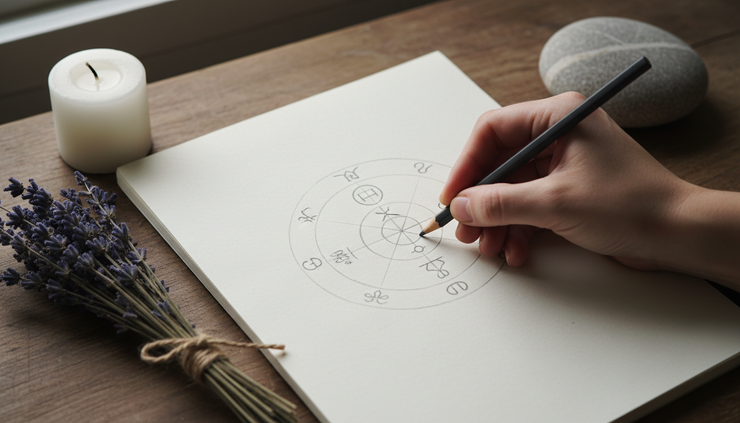
What a sigil is
A sigil is a symbolic mark created or used to carry meaning. In spiritual and magical practice, that meaning is usually intentional. The symbol may represent protection, confidence, clarity, devotion, healing of the self, transformation, or connection with a spiritual force.
Sigils can be simple or complex. A personal sigil might look like a few interlocking lines. A ceremonial sigil might include circles, letters, planetary symbols, divine names, or geometric patterns. A folk charm might be stitched, carved, drawn, painted, or traced in the air.
What makes it a sigil is not its visual style alone. It is the relationship between the symbol and what it represents.
A sigil can serve as:
A visual anchor for an intention
A ritual mark used during spellwork or prayer
A private sign connected to personal transformation
A symbol of protection, blessing, or dedication
A focus point for meditation or contemplation
Different traditions understand this relationship in different ways. Some view the sigil as a vessel for spiritual force. Some see it as a way to speak to the subconscious mind. Some use sigils as devotional or ceremonial tools. Others treat them as reminders that help direct attention and action.
There is no single universal method. That is part of what makes the practice both powerful and easy to misunderstand.
How sigils have appeared in magical history
The word “sigil” comes from the Latin sigillum, meaning “seal.” Historically, seals were used to mark identity, authority, ownership, and authenticity. Over time, the idea of a seal became spiritually meaningful in many practices. A symbol could mark a name, represent a power, or bind a concept into a recognizable form.
In Western ceremonial magic, sigils became especially connected with the names of spirits, angels, planetary intelligences, and other unseen forces. Grimoires and magical manuscripts often included complex seals used in ritual settings. Practitioners did not usually treat these marks as casual drawings. They belonged to systems with prayers, timing, purification, sacred names, tools, and specific ritual steps.
Ceremonial magic often placed sigils inside a wider spiritual structure. A symbol might be connected to a planet, an angelic hierarchy, a divine name, or a ritual invocation. The sigil functioned as a point of contact or representation within that system.
Later, modern magical movements reshaped the practice. In the 19th and 20th centuries, occult orders, esoteric writers, and independent practitioners explored new ways to work with symbol, will, and consciousness. Modern chaos magic, in particular, helped popularize personal sigil creation. Instead of relying only on inherited seals or formal systems, practitioners began making their own symbols from personal statements of desire.
That shift made sigils more accessible. A person did not need to memorize a full ceremonial system to create a meaningful symbol. They could begin with a clear intention and design a mark that felt spiritually or psychologically charged.
Still, modern accessibility should not flatten the history. Traditional sigils, ceremonial seals, folk symbols, bindrunes, veves, yantras, talismans, and sacred marks all come from different contexts. They are not interchangeable. Some belong to living traditions and should be approached with respect, study, and permission where needed.

How a personal sigil turns intention into symbol
The basic idea behind a personal sigil is direct: take one specific intention and transform it into a unique symbol. The symbol then becomes a visible representation of that intention.
This process matters because the mind often responds strongly to images. A symbol can bypass long explanation. It can gather emotion, memory, desire, and focus into one shape. When used with care, a sigil becomes a point of return. It reminds the practitioner what they are choosing, protecting, releasing, or calling toward them.
For example, a person working on self-trust might create a sigil from the statement, “I trust my inner wisdom.” Another person seeking courage might create one from, “I speak with steady confidence.” Someone building a creative practice might use, “My creativity flows with discipline and joy.”
The symbol does not replace the work. A sigil for confidence will not speak for anyone during a difficult conversation. A sigil for abundance does not remove the need for wise choices, planning, or effort. A sigil for healing does not replace professional care when care is needed.
A spiritually mature approach recognizes both mystery and responsibility. The sigil can focus intention, create a ritual moment, support inner alignment, and serve as a sacred reminder. The practitioner still has to live in relationship with that intention.
A simple method for creating a personal sigil
This method is only one approach. It is useful for beginners because it is clear, flexible, and personal. Adapt it according to your own spiritual path, ethics, and tradition.
Choose one clear intention
Start with one intention, not a whole life plan. A focused intention is easier to symbolize and easier to work with.
Good intentions are specific enough to guide attention but open enough to allow growth. For example:
Protection for my home
Confidence when I speak
Creativity in my writing practice
Self-love during a season of change
Abundance through steady, honest work
Clarity in my next decision
Personal transformation with courage and patience
Try not to build a sigil around controlling another person. Many ethical practitioners focus on their own energy, choices, boundaries, and path rather than attempting to override someone else’s will.
Turn the intention into a concise statement
Write the intention as a short sentence in the present tense. Keep it simple.
Examples include:
I am protected and grounded.
I move with calm confidence.
My creative energy flows freely.
I treat myself with love and respect.
I welcome honest abundance.
My mind is clear and steady.
I release old patterns and grow.
Some practitioners prefer “I am” statements. Others prefer phrases like “May I be” or “I choose.” The wording should match your beliefs. If a statement feels forced, soften it until it feels true enough to work with.
Create or design a unique symbol
One common modern method is to remove repeating letters from the statement, then combine the remaining letters into an abstract design. For “I am protected and grounded,” you might remove repeated letters and use the remaining shapes as raw material. Lines, curves, circles, and angles can merge until the original words are no longer obvious.
Another method is intuitive drawing. Sit with the intention, breathe slowly, and sketch marks until one begins to feel right. The result does not need to look impressive. It needs to feel connected.
You can also build a sigil from imagery related to the intention. A protection sigil might include a boundary-like circle or a shield shape. A clarity sigil might include an open eye, a flame, or a clean vertical line. A transformation sigil might suggest a spiral, a seed, a doorway, or a rising path.
The final symbol should be distinct enough that you recognize it as yours.
Focus on the meaning behind the symbol
Once the sigil is drawn, spend time with it. Look at it quietly. Recall the intention. Let the symbol become linked with the feeling, prayer, or commitment behind it.
This step is where the symbol gains personal weight. Without meaning, it is only a mark. With attention, it becomes a signpost for the inner and outer work that follows.
Some people speak the intention aloud. Some pray over the sigil. Some meditate with it. Some place a hand over the symbol and breathe into the meaning. The form can be simple.
Decide how to work with it afterward
Before using the sigil, decide what role it will play. Will it be temporary or long-term? Private or visible? Part of a ritual or part of daily practice?
A sigil for a single event, such as courage during a conversation, may only be worked with briefly. A sigil for personal transformation may stay on an altar for weeks or months. A sigil for self-love may be placed in a journal and revisited during reflection.
There is no need to follow someone else’s rule if it does not belong to your path. Consistency matters more than drama.

Ways people use sigils in practice
Sigil work can be quiet and personal. It does not have to be theatrical. Many practitioners use sigils in ordinary, grounded ways.
Common uses include:
Placing a sigil on an altar as a focus for prayer or ritual
Meditating with the symbol while breathing into the intention
Carrying it privately in a wallet, pocket, pouch, or journal
Drawing it during ritual, spellwork, or devotional practice
Tracing it on the body with oil, water, or a fingertip
Placing it near a workspace for creativity or clarity
Burning, burying, washing away, or otherwise releasing it when the work feels complete
Using it as a visual focus before taking practical action
The method should fit the intention. A sigil for clarity might sit on a desk while someone reviews options. A confidence sigil might be carried before a public reading, interview, or difficult conversation. A self-love sigil might be placed near a mirror or inside a journal. A protection sigil might be kept near a doorway or on an altar dedicated to household peace.
Each form of use creates a slightly different relationship. Displaying a sigil keeps the intention visible. Hiding it can make it feel private and inward. Destroying or releasing it can symbolize surrender. Repeatedly drawing it can build familiarity and focus.
What charging or activating a sigil means
Many magical traditions include the idea of charging or activating a sigil. In simple terms, this means focusing energy, attention, prayer, emotion, or spiritual force into the symbol so it becomes ritually alive within that practice.
The details vary widely.
Some practitioners charge a sigil through meditation, breath, chanting, candle work, visualization, dance, trance, prayer, or ritual timing. Some place it under moonlight or sunlight. Some hold it between their hands. Some speak a sacred phrase over it. Some burn it as a way of releasing the intention into the unseen. Others keep it intact and return to it regularly.
Ceremonial magicians may follow structured rites. Folk practitioners may use prayers, herbs, saints, ancestors, charms, or household rituals. Modern practitioners may focus on the subconscious mind and the emotional force of desire. Devotional practitioners may ask a deity, guide, or spiritual ally to bless the symbol.
None of these approaches should be treated as the only valid method. The right approach depends on the tradition, the practitioner’s ethics, and the purpose of the sigil.
A grounded way to think about charging is this: the practitioner gives the symbol focused attention and spiritual meaning. That act creates relationship. The sigil becomes more than ink or graphite because it has been placed inside ritual attention.
Common misconceptions about sigils
Sigils often appear mysterious, so they attract misunderstanding. Some people see an unfamiliar symbol and assume it must be dark, dangerous, or harmful. That is not a fair or accurate assumption.
A sigil is not automatically negative. Like words, images, and gestures, symbols carry meaning through context. A heart can represent love, grief, anatomy, devotion, or decoration depending on use. A circle can represent unity, protection, eternity, or a simple shape. A sigil works the same way. Its meaning depends on the tradition, maker, intention, and use.
Another misconception is that any sigil has unlimited power once drawn. This idea can lead to fear or fantasy. A sigil is not a cosmic remote control. It does not erase consequence, override reality, or guarantee results.
A healthier view recognizes sigils as spiritual or magical tools. Tools can be meaningful, sacred, and effective within a practice, but they still work in relationship with the practitioner. Intention, emotional honesty, ritual focus, ethical action, and follow-through all matter.
A sigil for abundance has more integrity when paired with wise stewardship. A sigil for confidence gains strength when paired with practice. A sigil for protection works best alongside boundaries, discernment, and care. A sigil for transformation asks for choices that support transformation.
The symbol can help focus the path. It does not walk the path alone.
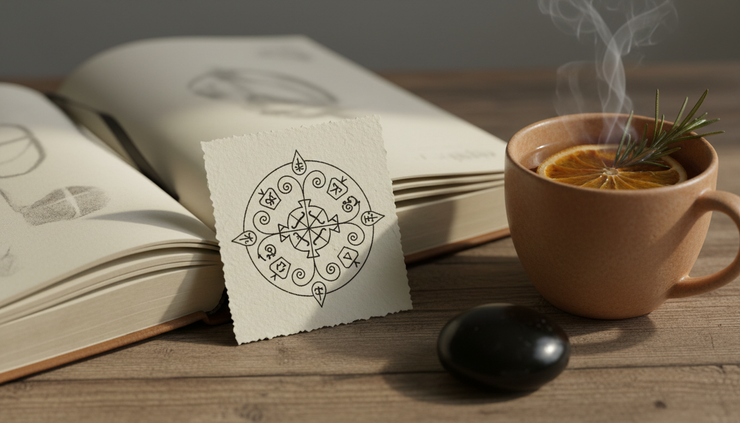
A respectful way to begin
If sigil work is new, begin simply. Choose an intention that supports your growth without trying to control others. Create a symbol by hand. Sit with it. Decide how you want to use it. Then take one practical step that matches the intention.
For protection, that might mean locking a door, setting a boundary, or cleansing a space. For creativity, it might mean opening the notebook. For self-love, it might mean speaking kindly to yourself after a hard day. For clarity, it might mean making the phone call, asking the question, or resting before deciding.
This is where sigil work becomes spiritually mature. The symbol gathers meaning, but the life around it gives that meaning roots.
A sigil can be beautiful, mysterious, and sacred. It can also be humble. A few lines on paper can hold a prayer, a promise, or a point of focus. When approached with respect, a sigil becomes a bridge between inner intention and embodied action.



Comments