Ọ̀ṣun and Self-Knowledge Before Love

Many people ask love to do work that only self-knowledge can do.
They ask, “Who will choose me?” before asking, “Do I know what I am choosing?” They ask, “Who will love me?” before asking, “Do I recognize myself clearly enough to receive love without disappearing inside it?”
Within Yoruba spiritual traditions and the wider Orisha-centered world, Ọ̀ṣun is often associated with love, beauty, sweetness, rivers, pleasure, fertility, abundance, art, charm, diplomacy, and attraction. Because of this, some people reduce her to romance alone. They approach her only through longing for a partner, a marriage, a reconciliation, or the return of someone who has left.
That view is too small.
Ọ̀ṣun opens a deeper doorway. She invites a person to ask what love means when it is connected to dignity, joy, creativity, boundaries, desire, and worth. She asks whether sweetness is still sweet if it costs you your voice. She asks whether being wanted is the same as being known.
The question beneath love is often identity. Before love can become healthy, a person may need to ask: Do I know myself well enough not to abandon myself in order to be loved?

Ọ̀ṣun teaches that love begins with knowing what has value
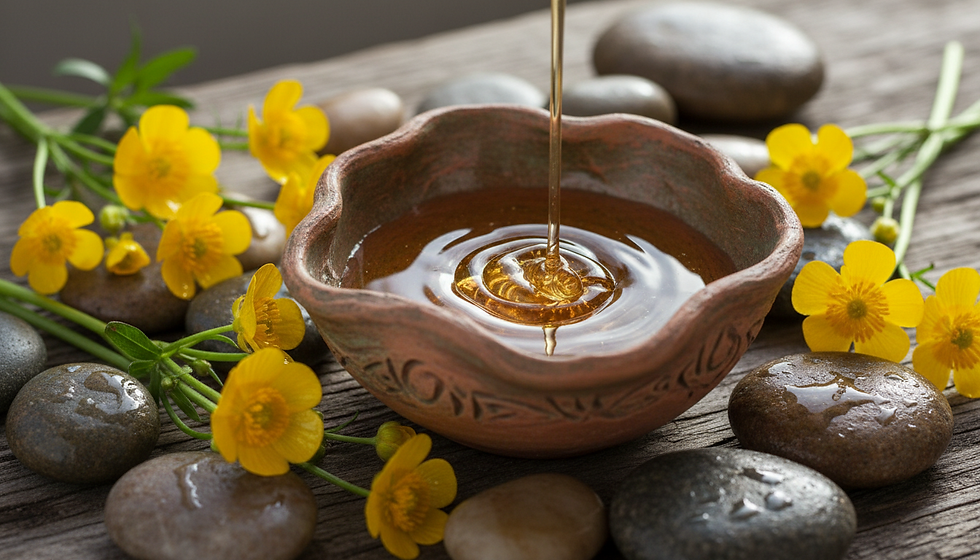
Ọ̀ṣun is linked with sweetness, but sweetness is not weakness. Honey has softness, fragrance, and pleasure, yet it also has weight. It clings. It preserves. It carries medicine in many cultures. In a spiritual sense, Ọ̀ṣun’s sweetness can point to the part of life that makes existence worth tasting.
This matters because many people confuse love with intensity. They assume love must feel like urgency, longing, or pursuit. They mistake anxiety for depth. They mistake being chosen for being cherished.
Ọ̀ṣun’s symbolism asks a different set of questions:
What makes life feel beautiful to you?
What pleasures return you to yourself rather than numb you?
What kind of attention feels nourishing instead of consuming?
Where do you feel most alive?
What do you value when no one is watching?
What kind of love helps you grow instead of shrink?
These are not decorative questions. They are identity questions.
If you do not know what brings you joy, another person can easily define joy for you. If you do not know your values, chemistry can persuade you to betray them. If you do not know your boundaries, affection can become a tool that trains you to ignore your discomfort.
Self-knowledge is not a mood. It is a form of spiritual honesty.
Ọ̀ṣun is not only a figure of romance
It is natural that people connect Ọ̀ṣun with romance. She carries the energy of attraction, sensuality, beauty, and relationship. Yet love in her spiritual field reaches far beyond dating, marriage, or desire for one specific person.
Love can appear as the pleasure of making music. It can appear as laughter in community. It can appear as the courage to care for the body rather than punish it. It can appear as the decision to stop begging for affection from someone who only gives it when you are silent.
Love can be creative, social, physical, communal, and sacred.
Ọ̀ṣun’s connection to fertility is often misunderstood in a narrow way. Fertility can include children, but it can also speak to the power to create, generate, nourish, and bring forth life. A person can be fertile with ideas, art, friendships, healing, language, gardens, rituals, and new ways of being. Abundance is not only money or romance. It is the experience of having enough inner life to meet the world with presence.
This is why turning toward Ọ̀ṣun only to ask for a lover can miss the larger teaching. She is not a vending machine for romance. She does not exist to guarantee that a particular person returns, changes, or falls in love. A more mature spiritual approach asks what her symbols reveal about desire itself.
What do you desire because it is true?
What do you desire because you feel empty?
What do you desire because you think being loved will prove you are worthy?
Those questions can be uncomfortable. They can also be liberating.
The question before love is whether you know yourself
“Who will love me?” is a human question. There is nothing shameful about it. People need affection, belonging, touch, friendship, and tenderness. We are not built to live without connection.
Yet “Who will love me?” can become painful when it stands alone. Without self-knowledge, the question can turn into begging. It can make any attention feel like a rescue. It can make someone accept crumbs because the hunger is so deep.
A fuller question comes first: Do I know myself?
Knowing yourself does not mean having a perfect personality, a healed past, or constant confidence. It means you have begun telling the truth about your inner life.
It means you can name your desires without immediately judging them. It means you can recognize when you are performing an identity to be approved. It means you can tell the difference between peace and boredom, between passion and chaos, between compromise and self-erasure.
To know yourself is to ask:
What do I keep pretending not to want?
What do I keep accepting that hurts me?
What kind of beauty do I need around me?
What does my body already know before my mouth admits it?
What kind of love makes me feel more honest?
What parts of myself did I hide to stay close to someone?
This kind of knowing changes how love is received. It makes attraction less blinding. It makes affection less intoxicating. It makes rejection less able to destroy the whole self.
Love should not require you to lose yourself
A major danger in relationships is the slow disappearance of the self.
It often begins quietly. Someone laughs at things they do not find funny. They stop wearing what they like. They soften every opinion. They cancel plans with friends. They say yes when the body says no. They become easy to love by becoming hard to know.
The relationship may look peaceful from the outside. Inside, the person is shrinking.
This can happen in romance, family, friendship, and spiritual community. The hunger to be accepted can become so strong that a person stops asking whether the connection is actually good for them.
Ọ̀ṣun’s beauty is useful here because real beauty has form. A river is fluid, but it still has banks. Without banks, it floods. Without movement, it stagnates. Love also needs shape. Boundaries do not kill love. They give love a place to move without destroying the land around it.
Changing yourself to be chosen carries a cost
There is a difference between growing with someone and editing yourself to survive their approval.
Growth may ask for patience, listening, humility, and repair. Self-abandonment asks for muting your needs, betraying your values, and calling it devotion.
Some signs of self-loss include:
You feel anxious when you express a normal need.
You are afraid your honesty will make the person leave.
You keep becoming smaller to keep the peace.
You confuse being needed with being loved.
You no longer recognize your own preferences.
You feel relief when the person is absent.
Love cannot be measured only by how strongly someone wants you. It must also be measured by what happens to your spirit in their presence.
Do you become more truthful?
Do you feel safe to grow?
Can joy exist without performance?
Can disagreement happen without punishment?
A relationship that requires constant self-erasure may offer attachment, pleasure, status, or familiarity. But it cannot offer the kind of love that honors the whole person.
The sweetness associated with Ọ̀ṣun is not an invitation to become pleasing at any cost. It is a reminder that life should still taste like your own.

Desire becomes wiser when it is examined
Desire is not the enemy of spiritual life. Ọ̀ṣun’s presence makes that clear. Pleasure, attraction, sensuality, adornment, and beauty can all carry sacred meaning. The problem begins when desire is left unexamined.
A person can desire love because they are ready for mutual care. They can also desire love because they want to escape loneliness, prove desirability, compete with others, or heal an old wound through a new person.
The desire may look the same on the surface. Underneath, it is different.
Self-knowledge asks desire to speak truthfully.
Try asking:
Do I want this person, or do I want the feeling of being wanted?
Do I love who they are, or do I love who I become in my imagination around them?
Am I drawn to their character, or to the challenge of winning them?
Do I feel peaceful, or only excited?
Would I still choose this if I did not need validation?
These questions do not make love cold. They make it clearer.
Ọ̀ṣun’s world is full of beauty, but beauty is not the same as illusion. The river reflects, but it also reveals distortion. If the water is troubled, the reflection changes. If the heart is desperate, it may call anything love.
Healthy desire can tolerate truth. It does not need denial in order to survive.
Self-worth is different from being desired
Being desired can feel powerful. It can make a person feel seen, chosen, and alive. Yet desire from another person is not the same as worth.
Worth is not assigned by a partner. It is not created by attention. It is not proven by how many people want access to your body, time, energy, beauty, or care.
In Ọ̀ṣun’s symbolism, adornment and beauty are not shallow when they arise from dignity. To dress, create, bathe, dance, sing, cook, rest, or decorate can become a way of saying, “My life is worthy of care.” The outer act points to an inner recognition.
That recognition matters because without it, praise becomes addictive. Compliments become oxygen. Romance becomes proof of existence.
When worth depends on being desired, rejection feels like annihilation. When worth has roots, rejection still hurts, but it does not get to name you.
Self-worth asks for practice. It grows when actions match inner value.
That may mean telling the truth when it shakes a relationship. It may mean leaving spaces where tenderness is always conditional. It may mean choosing friends who do not require performance. It may mean reclaiming joy after years of living for approval.
These choices are spiritual acts. They restore the self to its own altar.
Community teaches love beyond possession
Ọ̀ṣun is often approached through personal longing, but love is also communal. In many Orisha-centered traditions, spiritual life is not only private feeling. It includes elders, ritual, songs, offerings, stories, obligations, praise, and community care.
This broader view helps correct the idea that love means possession.
Some forms of love are not romantic at all, yet they save us. A friend who tells the truth kindly. A community that remembers your name. A child’s laughter. An ancestor’s story. A meal prepared with care. A song that brings the body back from numbness.
Love becomes healthier when no single person is asked to become the whole source of sweetness.
When romance carries every unmet need, it can become too heavy. One partner cannot be parent, healer, mirror, witness, purpose, and proof of worth all at once. A life with many streams of love is less likely to mistake obsession for devotion.
Ọ̀ṣun reminds us to notice where sweetness already lives.
It may be in art. It may be in friendship. It may be in the body’s delight. It may be in service. It may be in the courage to enjoy life without apologizing for joy.

A practice for asking better questions about love
This reflection does not require perfect certainty. It asks for honest attention. A simple practice can help.
Sit somewhere quiet with a glass of water, a candle, or an object you associate with beauty. If you honor Ọ̀ṣun in a specific tradition, follow the guidance of that tradition and your elders. If you are reflecting more generally, keep the practice respectful and simple.
Write three headings in a journal.
What I want
Name desires without editing them. Include love, beauty, pleasure, family, creativity, rest, touch, friendship, money, safety, and joy if they are true.
What I abandon
Name the parts of yourself that disappear when you want approval. This may include your voice, your style, your spiritual practice, your needs, your boundaries, your art, or your friendships.
What love must honor
Name the conditions that allow love to remain healthy. This might include honesty, mutual respect, emotional safety, shared values, room to grow, physical tenderness, accountability, and respect for your no.
Read what you wrote without rushing to fix it. Let the page become a river. Let it show you what has been moving beneath the surface.
The goal is not to become hard or closed. The goal is to become present enough that love can meet the real self, not the version built for acceptance.
The deeper invitation of Ọ̀ṣun
Ọ̀ṣun’s sweetness is not only about attracting love. It is about becoming honest enough to recognize what kind of love can live near your spirit without harming it.
She invites a person to enjoy beauty, but also to ask what beauty reveals. She invites pleasure, but not numbness. She invites relationship, but not self-erasure. She invites abundance, but not hunger disguised as devotion.
Before asking “Who will love me?” there is another question waiting with more power:
Do I know myself?
Not perfectly. Not completely. But enough to know what brings joy. Enough to know what violates peace. Enough to know the difference between being desired and being valued. Enough to stop offering the whole self in exchange for partial affection.
Love becomes clearer when it meets a person who is willing to be known by themselves first.
And perhaps that is one of Ọ̀ṣun’s quiet teachings: sweetness is sacred, but it should never require you to disappear.


Comments