Ọ̀ṣun and Her Children: Motherhood, Protection and Legacy


When people speak about Ọ̀ṣun, they often speak about love, beauty, prosperity, fertility, sweetness, and the river.
But there is another word that appears again and again in traditions surrounding her:
Mother.
Ọ̀ṣun is remembered as a mother, a protector, a giver of children, and a figure whose relationship with her devotees can be described through the language of motherhood.
But her motherhood does not always appear in the same way.
Some stories speak about children in the literal sense.
Others speak about an entire community as the children of Ọ̀ṣun.
And some traditions reveal her maternal nature through stories of fertility, longing, suffering, and the desire to bring life into the world.
To understand Ọ̀ṣun as a mother, we have to look at all of these stories.

The Woman Who Wanted a Child
One story begins not with Ọ̀ṣun as an Orisha, but with Ọ̀ṣun as a woman.
In this tradition, Ọ̀ṣun is described as a beautiful woman who lived in a village and was admired by the people around her. She married a man named Oluodemi, and for a long time the couple remained without children.
Her husband was patient with her, but Ọ̀ṣun carried the weight of not being able to conceive.
Eventually, she sought guidance from an oracle.
She was instructed to create a small baby figure from brass and care for it, bathing it each morning and treating it with the love and attention she hoped to one day give to a child.
She followed the instructions.
But the situation became more difficult when another woman entered her household.
Her husband took a second wife, Asiyanbi, and eventually Asiyanbi became pregnant.
The woman who had longed for a child was now watching another woman carry one.
According to the story, Ọ̀ṣun initially welcomed Asiyanbi with tenderness.
But after Asiyanbi became pregnant, the relationship changed.
Asiyanbi became disrespectful toward Ọ̀ṣun, and when her child was born, she prevented Ọ̀ṣun from touching the baby.
The situation eventually became unbearable.
One day, after an argument in the household, Ọ̀ṣun was overwhelmed by grief, frustration, and humiliation.
She cried out.
The force of her emotion became so powerful that thunder was heard throughout the village.
And as she knelt there, water began pouring from her pot.
Then Ọ̀ṣun remembered the oracle's instructions and everything that had happened.
The story ends with Ọ̀ṣun transforming into water and flowing away.
It is a striking story because motherhood is not presented as something simple.
There is longing.
There is disappointment.
There is love.
There is pain.
And there is transformation.
The woman who desperately wanted to give life ultimately became part of the waters associated with life itself.

Ọ̀ṣun as the Mother of Òṣogbo
But there is another way that Ọ̀ṣun's children appear in Yoruba tradition.
They are not necessarily individual children.
They are a people.
Within Òṣogbo, Ọ̀ṣun is deeply connected with the identity of the city itself. Oral traditions and praise poetry describe Òṣogbo as the child of Ọ̀ṣun and portray her as the mother of its kings and people.
This is a beautiful expansion of the idea of motherhood.
A mother does not only give birth to a person.
A mother can give birth to a community.
She can protect a people.
She can nourish a place.
She can become part of the identity of generations who come after her.
This is reflected in the relationship between Ọ̀ṣun and Òṣogbo.
The Osun River runs through the sacred grove, and the grove remains an important center of Ọ̀ṣun worship. UNESCO recognizes the Osun-Osogbo Sacred Grove as a sacred cultural landscape in which the river and the spiritual traditions surrounding Ọ̀ṣun remain central.
In this sense, the people who identify themselves as children of Ọ̀ṣun are participating in a relationship that reaches beyond one lifetime.
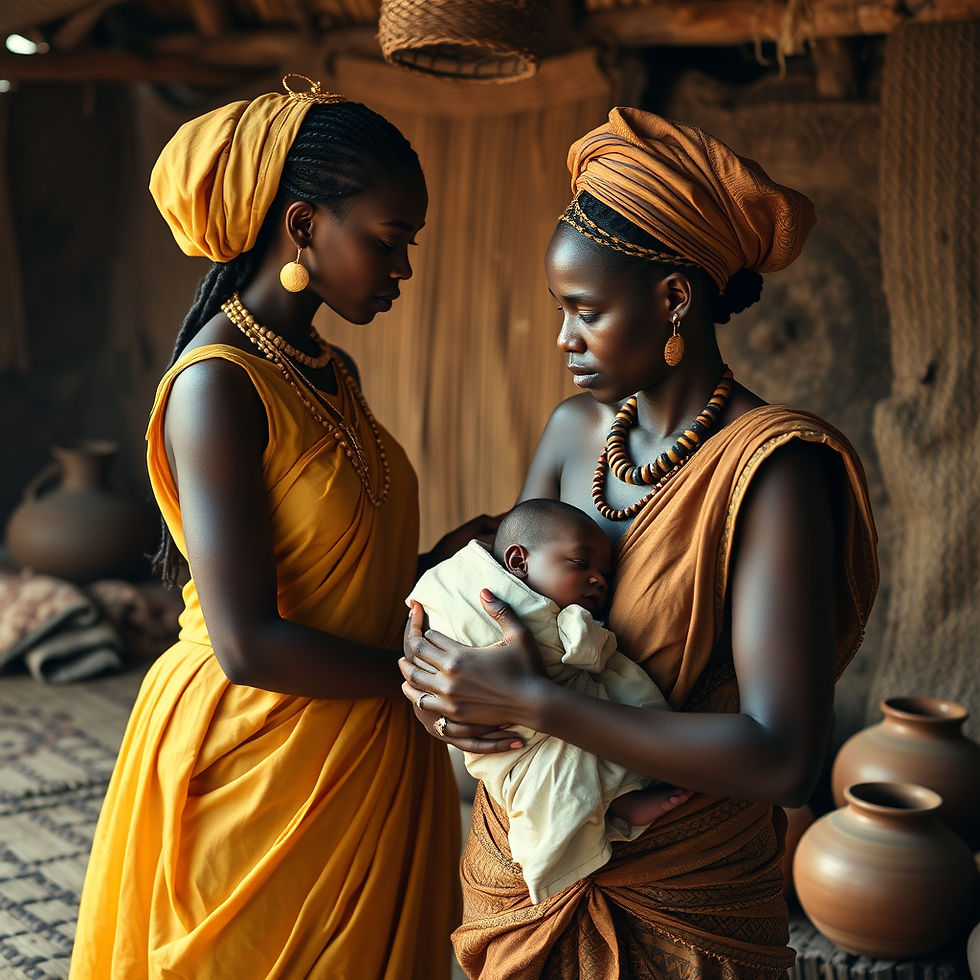
The Children Who Come to Ọ̀ṣun
There is also another meaning to calling Ọ̀ṣun a mother.
Women have historically appealed to Ọ̀ṣun in matters concerning fertility and childbirth. Traditions surrounding her describe her as having the ability to assist women seeking children and to protect children after they are born.
This makes the relationship between Ọ̀ṣun and motherhood deeply connected to water.
Water nourishes.
Water cleanses.
Water sustains.
And the river becomes a place where people can approach Ọ̀ṣun with their hopes for family, fertility, health, and protection.
Her maternal identity therefore isn't limited to the question of whether she had a particular number of children.
It is also about the people who come to her seeking help for theirs.
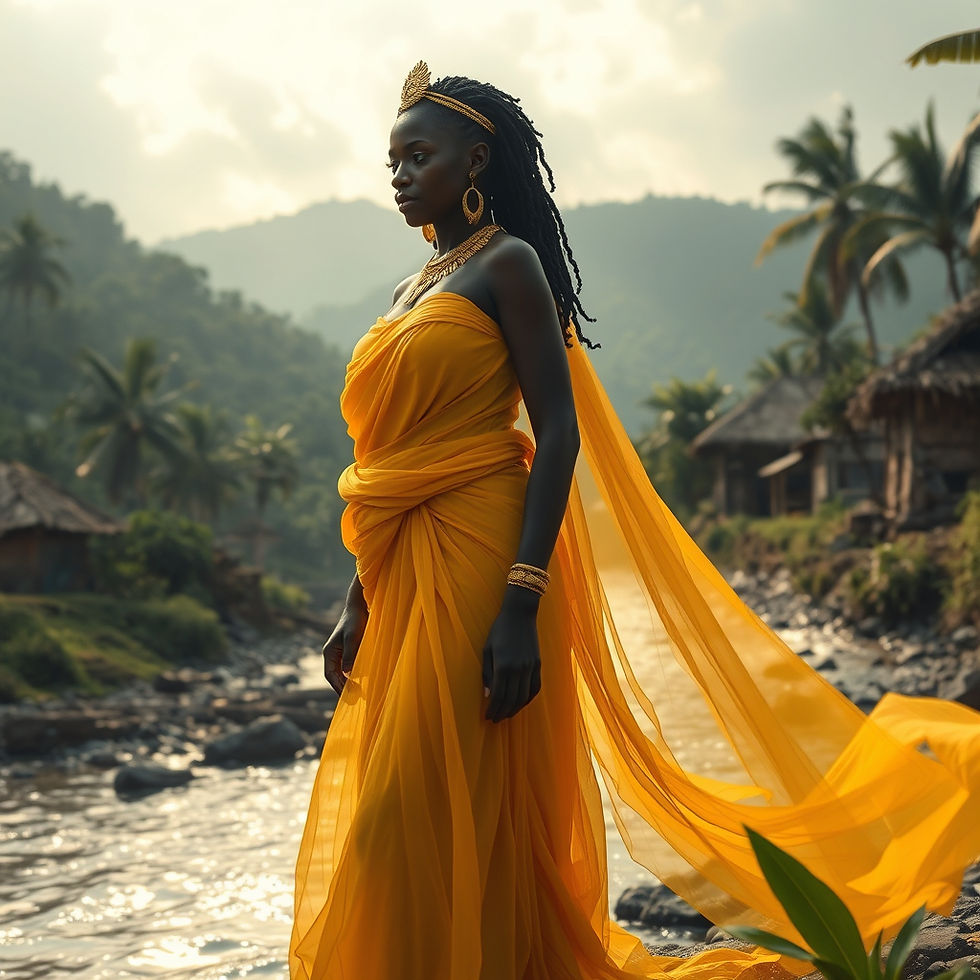
So, How Many Children Did Ọ̀ṣun Have?
This is where the traditions become important.
You will find sources that give specific genealogies or identify particular children or divine descendants associated with Ọ̀ṣun.
You will also find traditions that emphasize her role as a mother without giving a single, universally agreed-upon list of children.
And that difference matters.
Yoruba religious traditions were preserved through oral histories, praise poetry, ritual practice, regional traditions, and later written accounts. Because of that, genealogies can differ depending on the community and tradition being discussed.
So rather than pretending there is one definitive answer, it is more accurate to say that Ọ̀ṣun's motherhood is expressed in several ways across Yoruba traditions.
She can be understood as a mother of children.
A mother who helps women seek children.
A protector of children.
A mother of devotees.
And, particularly in Òṣogbo, a mother of an entire community.

A Mother Whose Children Continue
There is something especially powerful about the way Ọ̀ṣun's motherhood extends beyond biological children.
Her children can be people who come to her.
People who seek her protection.
People who honor her.
People who depend upon the river.
People who inherit the traditions of those who came before them.
The people of Òṣogbo have described themselves through the language of being Ọ̀ṣun's children, and Yoruba praise poetry honors her as a mother whose labor for her children deserves recognition.
That gives us another way to understand legacy.
A mother leaves something behind.
A child carries something forward.
And sometimes what is passed down is not simply blood.
It is a name.
A tradition.
A place.
A story.
A relationship.

The Mother in the River
Perhaps that is why the image of Ọ̀ṣun and water continues to feel so connected.
In one story, a woman longing for a child becomes water.
In Òṣogbo, the river becomes part of the relationship between Ọ̀ṣun and her people.
In traditions surrounding fertility, women turn toward her when they hope to bring children into the world.
And through generations of worship, people continue to call themselves her children.
So when we call Ọ̀ṣun a mother, we are not limited to one family tree.
We are talking about a much larger idea of motherhood—one that can include birth, protection, nourishment, fertility, community, memory, and legacy.
Her children are not only those who came from her.
They can also be those who continue to carry her story forward.
And perhaps that is one of the most enduring parts of Ọ̀ṣun's story:
what a mother gives does not always end with the child. Sometimes it becomes a river, a community, a tradition, and a legacy that continues flowing long after the original story has been told.



Comments